

Boys And Young Men Are In Danger. So Are Their Classmates. Here Are 7 Solutions.
All of us - of all genders, ages, and cultures - have a role to play in solving this crisis.
Underneath the abject horrors of school shootings, below the grasp of automatic rifles and magazine cartridges, exists a teenager, angry, overwhelmed, who’s endured childhood abuse, domestic violence, and severe bullying at school. According to data trackers, the adolescent is, on average, 16 years old. New York Times columnist David Brooks notes this teen is in crisis, isolated, bitter, at a breaking point, and craving revenge, power, and notoriety.
And, he is male.
98% of mass shooters are male, as reported in The Violence Project: How to Stop a Mass Shooting Epidemic, 2021, by researchers Jillian Peterson and James Densley.
We know this. But do we ask, “Why?”
As gender violence prevention educator and activist, Jackson Katz, asks, why does the media avoid saying so, most often using gender-neutral terms like shooter, perpetrator, or intruder for an action that is patently not gender-neutral?
While access to assault weapons must urgently be addressed, it’s also imperative that we dig deeper to uproot a rotted source of male violence deeply embedded in our social and cultural mythologies and which denies male children the ability to develop as whole humans:
harmful definitions of manhood.
Since 2008, One Circle Foundation has been asking “Why?” to adults working with boys and young men, while simultaneously providing a gender-transformative experience through The Council for Boys and Young Men®. Examining gender definitions has been integral to our mission since inception, expanded over time to address norms across the gender spectrum. In The Council for Boys and Young Men, aka Boys Council, youth find belonging, build assets, and deconstruct harmful masculinity beliefs on their journey to adulthood. The program is designed for boys, young men, and youth that identify with male development.
If you’ve attended The Council for Boys and Young Men® Facilitator Training, you'll recall the trainers ask:
What comes to mind when you hear the word "boys"? What comes to mind when you hear the word "men"? Responses typically include:
- Be tough.
- Strong.
- Dominate.
- No fear.
- Don't ask for help.
- Never show weakness.
- Don't cry.
- Don’t care.
These are not exhaustive of the descriptors called out. We also hear protector, responsible, problem solver, leader, creative, or teammate. Cisgender and Straight are descriptors so deeply ingrained that they’re often assumed and not even stated. By far, to “be tough” is the most prevalent idea, and, at its most rigid, deadly.
- When children can’t express emotions -like fear, sadness, or hurt- they push them away.
- When showing hurt feelings results in humiliation, they push that feeling away.
- When mocked for a characteristic they have no control over, and can’t show how overwhelmed they feel, they definitely push that feeling away.
Disconnecting from our emotions is like disconnecting from our organs. Emotions are biological-based signals designed to motivate behavior. If a child ignores or can’t detect a hunger signal, they don’t seek out food to fuel their body. If they disconnect from emotions, they can’t develop the neural pathways needed to identify, regulate, and integrate them nor the experiences that gave rise to them.
Depending on the severity and frequency, these patterns of disconnection can become traumatic, generating toxic stress that disrupts their brain, emotional development, and overall well-being (see Brain Architecture, at Harvard’s Center for the Developing Child).
Nearly everyone has heard a boy shamed for expressing pain or fear:
- Stop crying!
- Don’t be a baby!
- You’re such a girl!
- Man up!
To Man Up, they mask up. The Mask You Live In documentary follows youth who have worn the mask but are invited to take them off with peers and a caring adult, like Million Mask movement founder Ashanti Branch. What happens to boys when their emotional pain gets masked, or exiled? They are internally stranded: lonely, confused, and sooner or later, very angry. Rigid gender norms - perpetuated in our families, social media and entertainment, business, finance, education, academics, athletics, religion, politics, and virtually all aspects of society - hurt the boy or male-identified young person growing up; they hurt their relationships, families, and communities. The impact of rigid norms can be all the more harmful for women, girls, LGBTQI+, BIPOC, indigenous, people with disabilities, non-European immigrants, and others.
And for those young men who have been chronically or severely traumatized, the results can be heart-wrenching, violent, and horrifying.
Nearly 70% of school mass shooters have suffered childhood neglect or abuse, were raised by a parent with a severe, untreated mental illness, experienced or witnessed domestic violence or loss of a parent from suicide or other traumas, and were more likely to have been bullied at school. At their peak of distress, they are suicidal and homicidal. Taking their cues from the man box, they don’t ask for help. Not directly, anyway.
Instead, despairing male teens plan to take revenge at school by killing students and staff, and usually, themselves. They seek out guns, heavily marketed to young men to demonstrate their manhood. [See marketing wiz Rachael Kay Albers on how gun manufacturers are also marketing guns to children.] When they follow through, countless innocent lives are lost, families and communities devastated, and a generation of terrified students practice mostly futile survival drills in classrooms.
What must we do?
- Apply a “both/and” mindset to violence extinction work.
Commit to taking care of yourself, radically, in every way that is necessary and possible for you; and, pay attention to and act on behalf of our children and their futures, as much as possible. One step, then another. We can only extinguish violence by doing this work. - Call for safer gun laws for kids.
Know your state’s laws protecting children from firearms.
Vote. March. Text, email, phone, talk, and tweet with your local, state, and national leaders to promote safer gun laws for youth. Follow and support organizations at the forefront of this issue. - Listen, actively. Today.
One-on-one, or in a circle, this is the single most important practice to help youth connect with you, peers, and their own internal world. Ask open-ended questions like: “What’s on your mind?” and “I’m listening. Say more. ” Accept what they say, even if you see it differently. Show your interest.
Boys’ forbidden feelings and concerns morph from anger and “who cares?” to vulnerability and feeling understood when someone listens.
“That [program] kinda helped me in like in real life too like in public with everything. Like not to judge people so much, like right I have been not like mad all the time. I’ve been more happier and just hanging out, just being myself…” [Youth]
The most common factor in children who are resilient from childhood trauma is a stable, committed relationship with a caring adult. To manage overwhelming stress and grow healthy coping skills, youth need adults to hear their stories, witness their ups and downs, understand, and, sometimes, provide resources. But mostly, they need them to listen. Caring adults put aside their to-do lists, make the time, become attentive, listen carefully without judgment, and show acceptance and respect for youth. According to authors Peterson and Densley, the majority of mass shooters had no such caring adult to turn to. - Prepare yourself.
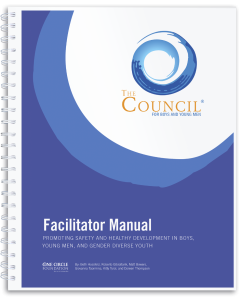
Attend The Council for Boys and Young Men® Facilitator Training. It’s going to prepare you well with the knowledge, skills, and confidence to facilitate a successful program. It’s okay to start a circle without the training, but you’ll be far more prepared to reach your goals once you attend. And, you’ll have fun. Scholarships available.
It’s not easy to enter a training room or zoom room on the first morning knowing the topics are going to examine gender norms, especially for men. Good news! It turns out great.
“I’ll be honest, I had reservations about coming here, but once I got here, once we started getting together and getting our hands on the material and doing things, it turned out well. I’m glad I came. I got some good information. I’m very pleased.” [Bryan, Adult Trainee]
Acquire the curricula. The Council for Boys and Young Men Activity Guides will assist you to set the tone, the 7-Step structure, and relevant topics to catapult your program. Ancestral and historical knowledge, cross-cultural and indigenous traditions, evidence-based practices, and fifteen years of experience are built into the format, topics, and activities of the curricula.
For example, in the fifth session of the Men of Honor: Becoming Respectful Nonviolent Leaders, Set 1, two scenarios are presented: a talented athlete is denied a spot on the team due to low grades in two subjects; a young man is rejected by a young woman. They identify likely emotions and explore which ones are ruled out by the Man Box. Next, they consider the pros and cons if the character follows the Man Box rules. Finally, they make their own rules for emotions.
OCF does not require facilitators to use these guides, but to achieve the best outcomes with the model, every Boys Council session follows the 7-Step format and strengths-based approach. The topics and activities can be modified or swapped out for other ideas to best fit the needs of the participants.
Team up with a co-facilitator or step out on your own. Line up your go-to people to talk things over when needed. Don’t carry it all on your own shoulders. The OCF community can be your go-to people, too. [Attend our free online monthly facilitator support group meetings]
- Start a circle.
Welcome youth into the circle. Incentivize if useful to help them start in the safe space, take off their masks, and find a “for real” community.
Make it accessible with time, place, transportation, and desirable snacks. Let them try a session before committing. Online circles work too.
Respect initial disinterest and continue following the steps.
Demonstrate that the circle is not a class. The adult(s) and youth are at eye-level, equidistant from the center. The motto, “All-Us-We”, spoken by our friend and new Public Relations and Partnerships Manager, Dr. Roberto Gilbratarik, applies.
Everyone is the expert on their own lives.
"We were not teased about saying things in the circle.” [Youth]
- Question gender norms.
In OCF training, we ask adults to go through the same experiences that they will ask of the youth in their Boys Council programs. In small groups, trainees participate in sequenced activities that generate discussions about how male gender norms were shown to them, impacted them, how their decisions and behaviors were influenced, and how they’ve impacted others in their lives. Through reflections, they observe that the harshest rules cause the greatest damage to themselves and those that matter most to them.
One activity from the Living a Legacy Activity Guide asks trainees about their gender norm behaviors, for example:
“Please step into the box if you have ever...
Thought you were not athletic enough
Thought you were not tough enough
Worked out or took supplements like creatine to make yourself look tougher
Hit or hurt another person to prove you were tough…
And so on, with an increasing (and optional) intensity of personal sharing. This activity provides an immediate link to each one’s life experiences and replaces men’s isolation and shame with belonging and support. Women, too, may discover their own hidden biases about gender as well as empathy for the oppressive rules and conditions that shape and harm boys' and men’s development.
"It was fantastic. I thought I grew as a person. I learned a lot of new things, and it was just…unbelievable.” [Bob, Adult Trainee]
In the Boys Council program, activities widen the lens and open up conversations so youth see beneath and beyond the brutality of harmful man-box rules. When they see it for themselves, they choose to break out of the box.
“It is like okay to express your feelings, even though you’re a guy, just like don’t bottle them up. Cause I think guys who do that, they get in fights and stuff.” [Youth]
Monitor and adjust your views and behaviors about manhood and rigid gender roles. You might think gender norms have eased up but look around. There is a huge backlash happening toward LGBTQI+ people and women’s rights, not only here in the U.S., but internationally. Renowned, wealthy comedians are raking in millions at the expense of transgender people. All of these patterns and restrictive laws affect everyone - the boys and young men learning to habitually harden their spirits; and the girls, young women, LGBTQI+ youth, families, schools, and communities in their spheres. The greater the mocking and injustice toward people because of their gender identities, the greater the threats of bullying, harm, humiliation, and violence for every young person. Pay attention to your words, assumptions, and expectations around children and gender. Be prepared to stand up for your views so that boys, young men, and all young people can develop fully.
Gender intersects with all aspects of identity - race, ethnicity, culture, faith or spirituality, sexuality, place of origin, ability, language, developmental age, and more. It must be viewed within the whole context of a person’s life. The questions we ask in a circle can broaden understanding with each dimension of identity explored. When we ask how a particular man box rule impacted someone, for example, we can invite more of their experience by following up with, “And, how do you see _____[e.g., race, faith, culture] interacting with that man box rule?”
- Foster resilience through relationships.
Here’s the key: A circle is an equity-based system. Facilitators hold the ultimate responsibility to protect the circle’s safety, guide the youth through the 7 Steps format, and believe in them. Yet, the change agent is the participants’ relationships with one another, built on respect, acceptance, permission to show their whole selves without pressure, and accountability to one another. The circle generates their resilience and capacity to develop safer and healthier relationships with themselves and their communities.
“I’ve become a better person.” [Youth]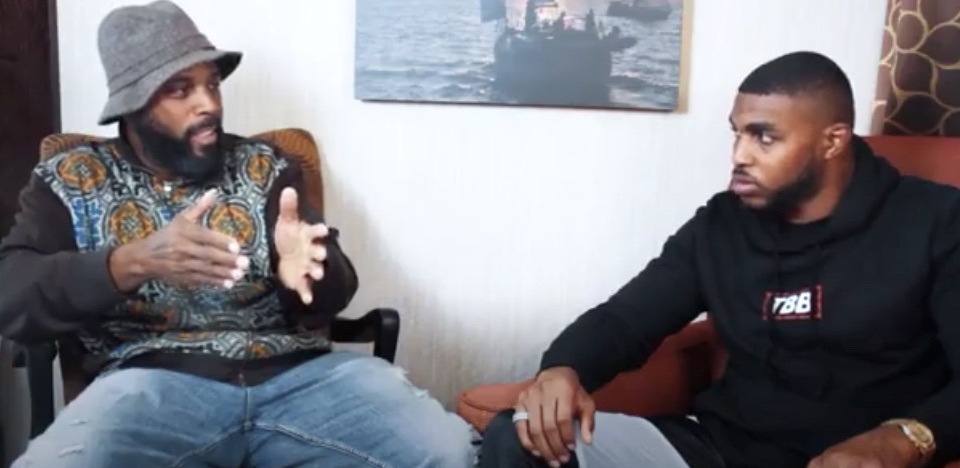
OCF Board Member Aimé Mukendi, Jr., (right)of Sir Aimezing, LLC, interviews Saladin Allah (left) about facilitating the Boys Council program in New York State.
“There are no safe spaces for [boys] to engage in these discussions about manhood, about masculinity… they’re not in the schools, because that’s not the content included in the state (education) standards. So where are they having these conversations? They’re not in their households, they’re not having them on the streets with their peers; a lot of time’s that’s an echo chamber. So they don’t have somebody that is in a position that’s helping to facilitate these discussions around ideas they may have never considered before. So, I know it’s important because they don’t have spaces like this, at all, to discuss any of these topics about identity, about masculinity, about healthy relationships with their peers and their female counterparts.”
-- Saladin Allah, Community Liaison , Niagara Falls Underground Railroad Heritage Center
We’ve got solutions to end this violence. Let’s help one another.
Our vision is a circle for every youth. We are all connected.
- Main Photo Credit: Jose Alonso https://unsplash.com/@jd_alon?utm_source=unsplash&utm_medium=referral&utm_content=creditCopyText
Related Posts

Related Products

Leave a Reply
Search The Blog
Categories
- One Circle Foundation
- Spanish
- Facilitator Tips & Tools
- LGBTQ+
- Funding
- Inspiring Stories
- Membership
- Creativity
- Classroom Support
- Trainings
- Facilitators
- Trainers
- Executive Director
- Implementation
- High Impact Practices
- OCF Board
- Autism Awareness Month
- Support Neurodivergent Youth
- Bay Area Training
- Bay Area Professional Development
- Newsletter
- ASCA Conference 2024
- Los Alamos JJAB
- Suicide Prevention
- movember
- Black History Month
- Awareness & Advocacy
- Social Studies
- Mental Health
- Intergenerational Trauma
- Must Read
- Civil Rights & Social Justice
- Freedom & Justice
- Inspiration & Leadership
- Martin Luther King Jr.
- Sexual Assault Awareness Month
- Social Justice
- Mental Health & Wellness
- Community Education
- Voice and Choice
- Mental Health in Education
- Adolescent Behavior
- Teen Psychology
- One Circle
- Emotional Intelligence
- Wellness & Self-Care
- Social Media & Teens
- Personal Growth
- Storytelling / Personal Narrative
- Training
- Curricula
- Girls Circle
- Unity Circle
- Guest Blogger
- The Council for Boys and Young Men
- Womens Circle
Archives
- April 2026
- March 2026
- February 2026
- January 2026
- December 2025
- November 2025
- October 2025
- September 2025
- August 2025
- July 2025
- June 2025
- May 2025
- April 2025
- March 2025
- February 2025
- January 2025
- December 2024
- November 2024
- October 2024
- September 2024
- August 2024
- July 2024
- June 2024
- April 2024
- March 2024
- February 2024
- January 2024
- December 2023
- November 2023
- October 2023
- September 2023
- August 2023
- July 2023
- June 2023
- May 2023
- April 2023
- March 2023
- February 2023
- January 2023
- December 2022
- November 2022
- October 2022
- September 2022
- August 2022
- July 2022
- June 2022
- May 2022
- April 2022
- March 2022
- February 2022