
Our roots
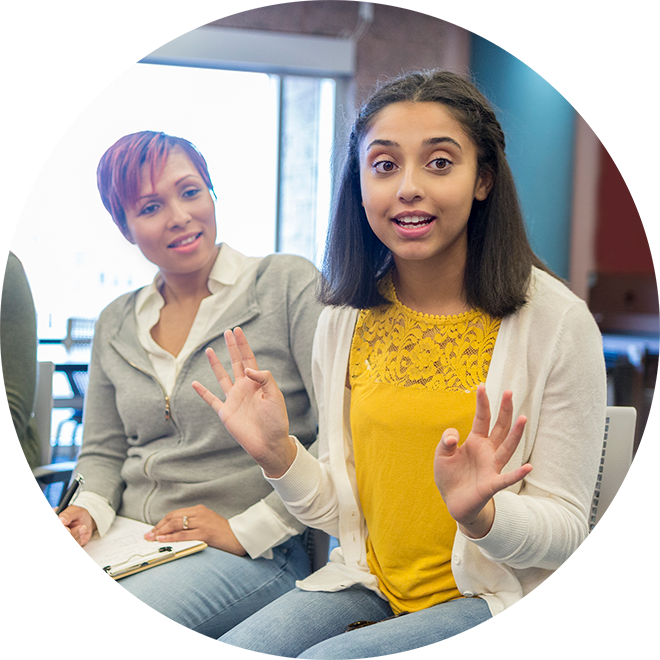
Inspired by the very positive responses to the Circles and the encouragement, leadership and assistance the girls shared with one another in the Circles, they developed the first Girls Circle® Facilitator Training in 1997 and the “Girls Circle Association” proceeded to become a nonprofit Project of the Tides Center in 1998.
This gender-responsive model, training, and curricula were well received nationally in the areas of: schools, mental health, child welfare, juvenile justice, and community based programs. National research of the model indicated that the program is responsive to girls across all ethnicities and demographics, and significantly increased positive body image, social support, and self-efficacy. The Office of Juvenile Justice and Delinquency Prevention recognized Girls Circle® as a promising approach, including it in the OJJDP’s Model Programs Guide.
While growing in depth and delivery of trainings for gender-responsive groups for girls, they also recognized the need for healthy, male-responsive development models for boys and young men. In fact, many of the facilitators of Girls Circle® groups creatively adapted the model for teen boys as well.
Our founders understood that to have lasting impact on girls, they must try to make a difference for all youth by also creating healthy conditions and environments that provide young men a solid pathway into manhood. In an effort to challenge myths about manhood – especially unhealthy myths like the “boy code” that lead to accidental injury, violence, drop out, interpersonal violence, depression, substance abuse, illegal lifestyles, prison, or compromised futures – they wanted to encourage full access to the range of healthy human capacities for boys and young men.
In 2006 Giovanna and Beth began partnering with experienced male and female facilitators to develop the Boys Council model which debuted the following year, now named The Council for Boys and Young Men®. The structured group model recognizes and builds upon inherent strengths and interests of boys and young men and connects youth in solidarity and community. Boys Council meets a core developmental need for positive relationships, the opportunity to address masculinity definitions and behaviors and to build leadership capacities individually and collectively.
In 2011, we announced our third model and our first for adults – Women’s Circle® – with curricula born out of the incredible efforts of The Ohio State University (OSU) Honors & Scholars Center and our partnership. These two crucial inclusions to our work - Boy’s Council and Women’s Circle® - inspired our name change to One Circle Foundation in 2012.
In the spirit of further expanding access to safe spaces for all youth to be who they authentically are, we developed the Unity Circle® model in 2021. This offered providers the opportunity to run programs with participants of any gender, including mixed-gender groups and was designed specifically to acknowledge and explore the complex ways in which race, ethnicity, sexual orientation, culture, and gender intersect and shape as well as impede and/or strengthen the relational experiences and dimensions of adolescent development.
As more communities experience and incorporate these models into their programs and services, they generate an ever-increasing interest from community members, who find that the relationships developed in Circles have a ripple effect of positive impacts and convey what we believe is an inherent and life-affirming truth: We are all connected.