


Pride Warriors of History


Post-military service, Baker used his artistic talents to create banners for anti-war and pro-LGBT+ marches. He quickly made friends with other local activists, including San Francisco city supervisor Harvey Milk (check out last week’s post!). At the behest of Milk and other friends, Baker was urged to create a new symbol for the LGBT+ community- a move away from the inverted pink triangle previously (and sometimes still) used to depict gay pride, a relic left over from the Nazi regime.
Using color to demonstrate meaning, Baker thought of a flag that would call upon the diversity of humanity. Working with friends, he dyed and sewed the original 8-striped Rainbow Flags. The original eight colors and symbols Baker decided on were:
 - Sex
- Sex - Life
 - Healing
 - The Sun
 - Nature
 - Art and Magic
 - Serenity
 - The Spirit
Over the years, the iconic symbol of the rainbow flag has become an intrinsic part of LGBT+ identity, politics, and culture. Gilbert Baker worked relentlessly over his lifetime to ensure that the rainbow flag would become a universally recognized, global icon of the LGBT+ community and its proud legacy, which it is today.
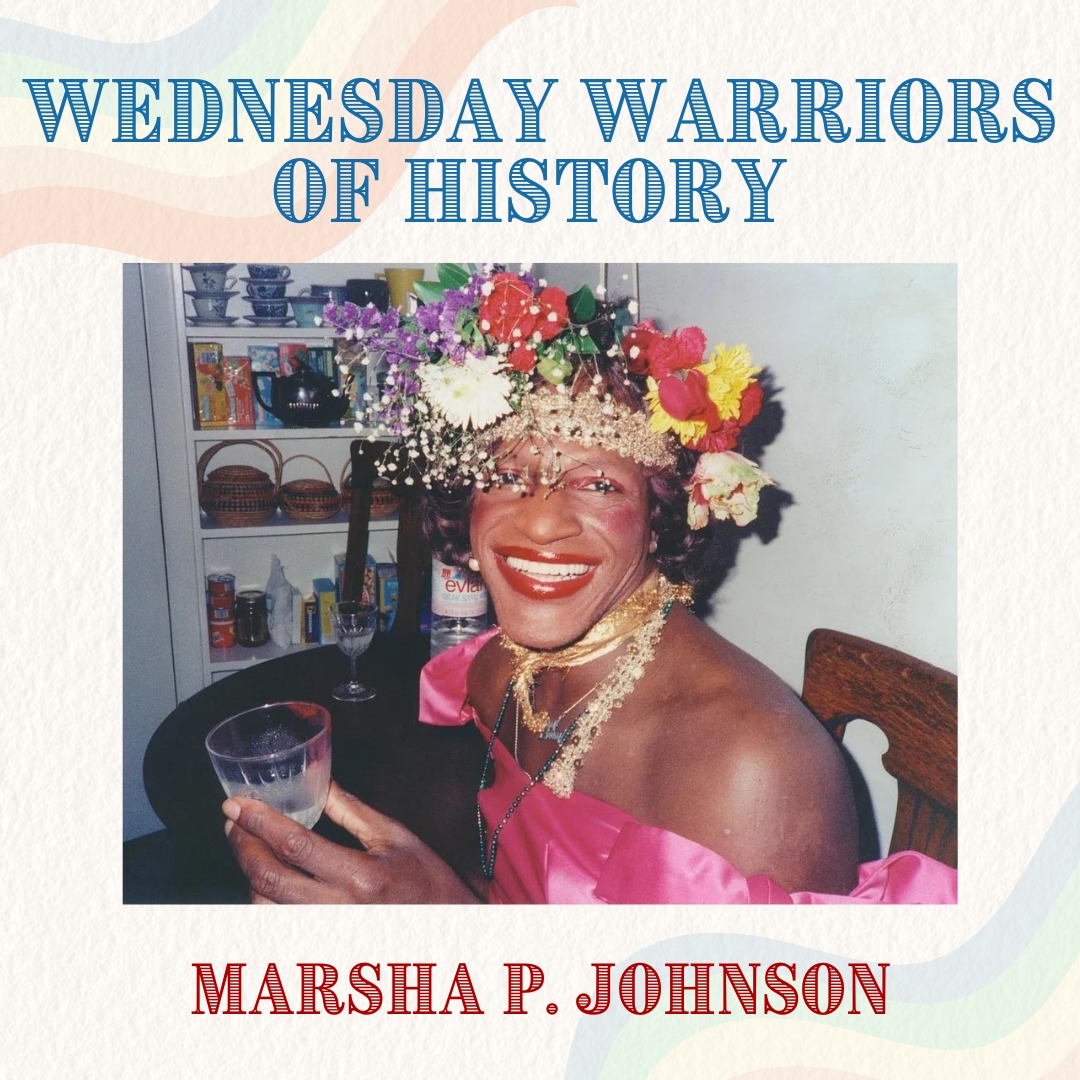
Yet, in July 1992, Marsha’s body was found in the New York Hudson River. Police at the time ruled it as a suicide, despite protests from her friends and the community that she was not suicidal, and that it was more likely to have been an attack. Marsha’s case remained closed for decades, until 2012 when the New York Police Department agreed to re-open it after receiving considerable pressure from the community. Nevertheless, Marsha P. Johnson’s death remains unsolved.
To this day, black transgender women face the highest level of discrimination and threat of violence in our nation. For more details and information on Marsha’s activist life, generous actions, and suspicious death, please check out “The Life and Death of Marsha P. Johnson” available on Netflix.
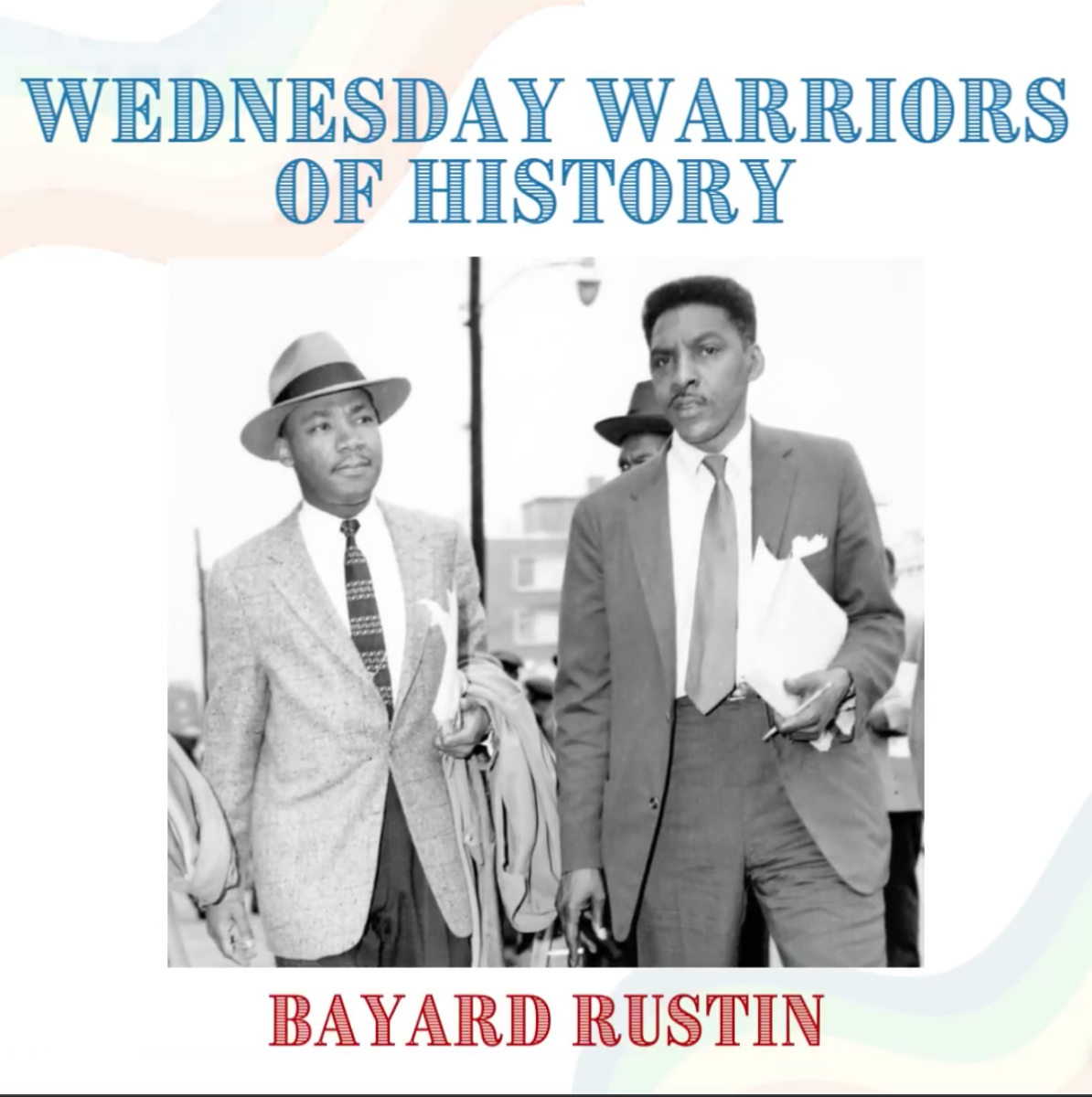
Rustin’s sexuality was frequently questioned and weaponized against him. One of such occasions, and perhaps the most significant, was during the 1960 Democratic National Convention. King, Rustin, and Randolph had begun plans to march at the Democratic National Convention of presidential candidate John F. Kennedy and Vice-Presidential Candidate Lyndon B. Johnson in Los Angeles, to protest the party’s tepid attitude toward civil rights.
When the party heard of these plans, Democratic congressman Adam Clayton Powell was dispatched to threaten King, telling him that if they proceeded with the march, he would accuse King of having an affair with Rustin, not only killing the march but also irreparably damaging the movement as a whole.
After consulting with his colleagues, King decided to distance himself from Rustin, who reluctantly resigned from the Southern Christian Leadership Conference. Consequently, during the 3 years of Rustin’s absence, progress within the civil rights movement began to slow. King, recognizing this, slowly reintegrated Rustin during the Birmingham Campaign of 1963.
However, when it was proposed that Rustin organize a renewed version of the March on Washington that had been canceled 20 years prior, leaders within the movement vehemently opposed it. This led to A. Philip Randolph’s nomination as director of the March, who appointed Rustin as deputy director, who, in less than two months, organized the single largest Civil Rights event in American history. Over 200,000 participants marched to the nation’s capital.
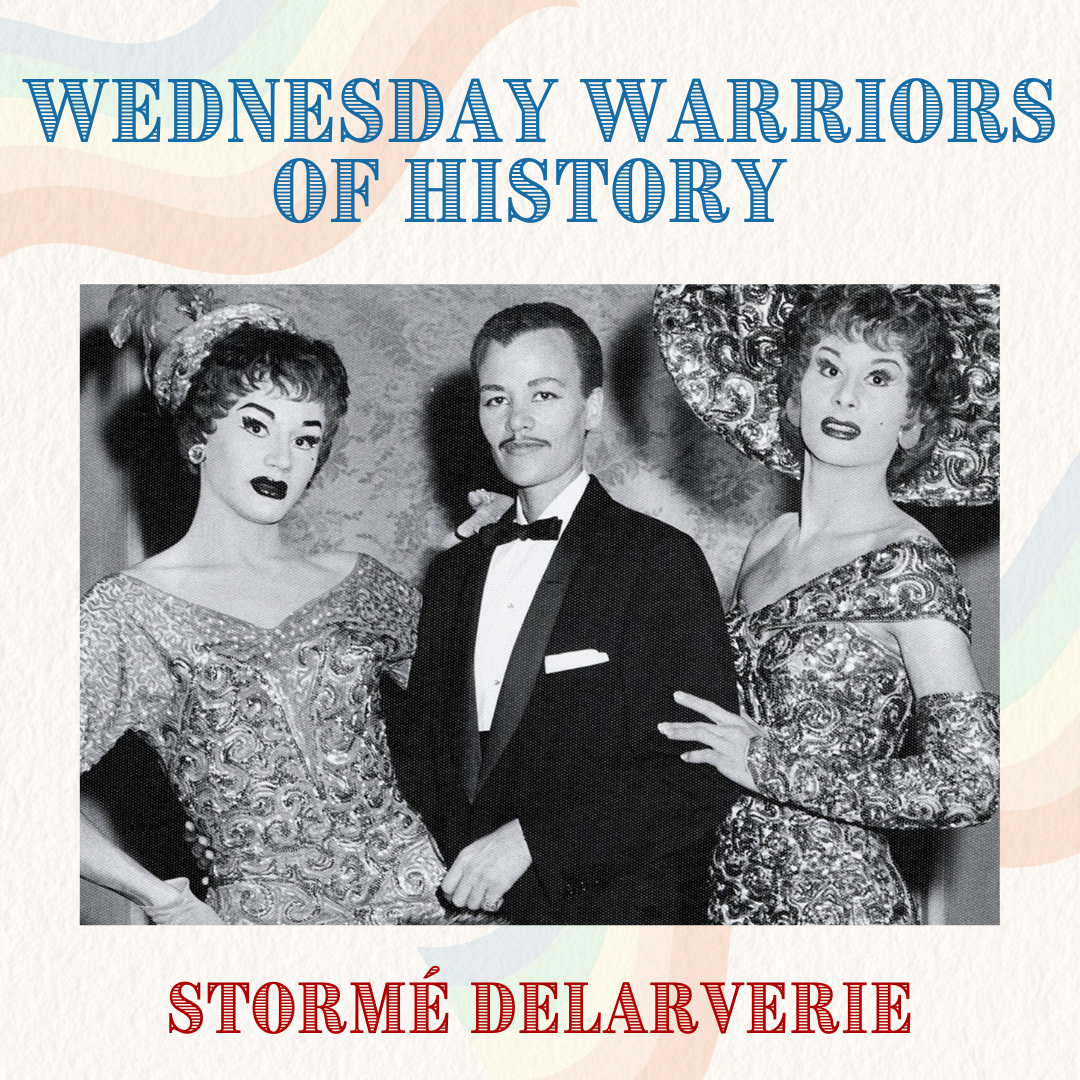
It’s not certain who threw the first punch at the Stonewall Uprising in New York City in 1969. However, many believe that it could have been Stormé DeLarverie, a groundbreaking drag king performer, who died in 2014 after spending her life as a gay and civil rights activist.
DeLarverie was born in New Orleans, Louisana in 1920 to an African American mother who was a servant to a white homeowner, her father. She spent the 1950s and 60s as the MC of the "Jewel Box Revue", a variety performance troupe that toured often, showcasing both black and white performers. The Revue mostly featured men dressed in drag while DeLaverie performed as the only male impersonator in the show. Most notably, the Jewel Box Revue was the first integrated drag company of this time and attracted crowds of both black and white viewers.
Prior to her time with the Jewel Box, however, DeLarverie is said to have worked in Chicago as a bodyguard to mobsters. Perhaps this is where her cool sense of style came from.
DeLarverie is best known for possibly throwing the first punch at the Stonewall Inn uprising in 1969. Although so many people were involved that night, it makes it difficult to determine who the instigator was. While some witnesses say that DeLarverie threw the first punch, and she made the claim herself as well, others say no. Regardless, DeLarverie was a significant part of what is seen as the catalytic event of the burgeoning gay rights movement.
Shortly after Stonewall, in July 1969, DeLarverie became part of the official formation of the Stonewall Veteran’s Association. She was very active in the organization, holding the various titles of Chief of Security, Ambassador, and from 1998 to 2000, serving as the organization’s Vice-President. DeLarverie was also a regular part of the pride parades in New York City.
For many years DeLarverie was also a self-appointed “guardian of lesbians” in the Village. From the 1980s through the 1990s, she worked as a jazz singer and a bouncer. She also held a state gun permit. Tall and armed, DeLarverie patrolled the streets of the lower Seventh and Eighth avenues in New York where gay clubs and bars resided, on the lookout for what she called “ugliness”. This was her word for any form of intolerance, bullying, or abuse of her “baby girls.”
She lived at the famous Hotel Chelsea throughout this time and maintained her vigilance against anti-gay and anti-black bigotry until she was 85. DeLarverie died in 2014 at the age of 93 after a long period of physical and mental health ailments. For more information on DeLarverie’s incredible life please check out the links below.


Leave a Reply
Search The Blog
Categories
- One Circle Foundation
- Spanish
- Facilitator Tips & Tools
- LGBTQ+
- Funding
- Inspiring Stories
- Membership
- Creativity
- Classroom Support
- Trainings
- Facilitators
- Trainers
- Executive Director
- Implementation
- High Impact Practices
- OCF Board
- Autism Awareness Month
- Support Neurodivergent Youth
- Bay Area Training
- Bay Area Professional Development
- Newsletter
- ASCA Conference 2024
- Los Alamos JJAB
- Suicide Prevention
- movember
- Black History Month
- Awareness & Advocacy
- Social Studies
- Mental Health
- Intergenerational Trauma
- Must Read
- Civil Rights & Social Justice
- Freedom & Justice
- Inspiration & Leadership
- Martin Luther King Jr.
- Sexual Assault Awareness Month
- Social Justice
- Mental Health & Wellness
- Community Education
- Voice and Choice
- Mental Health in Education
- Adolescent Behavior
- Teen Psychology
- One Circle
- Emotional Intelligence
- Wellness & Self-Care
- Social Media & Teens
- Personal Growth
- Storytelling / Personal Narrative
- Training
- Curricula
- Girls Circle
- Unity Circle
- Guest Blogger
- The Council for Boys and Young Men
- Womens Circle
Archives
- April 2026
- March 2026
- February 2026
- January 2026
- December 2025
- November 2025
- October 2025
- September 2025
- August 2025
- July 2025
- June 2025
- May 2025
- April 2025
- March 2025
- February 2025
- January 2025
- December 2024
- November 2024
- October 2024
- September 2024
- August 2024
- July 2024
- June 2024
- April 2024
- March 2024
- February 2024
- January 2024
- December 2023
- November 2023
- October 2023
- September 2023
- August 2023
- July 2023
- June 2023
- May 2023
- April 2023
- March 2023
- February 2023
- January 2023
- December 2022
- November 2022
- October 2022
- September 2022
- August 2022
- July 2022
- June 2022
- May 2022
- April 2022
- March 2022
- February 2022