

Using Your Manual
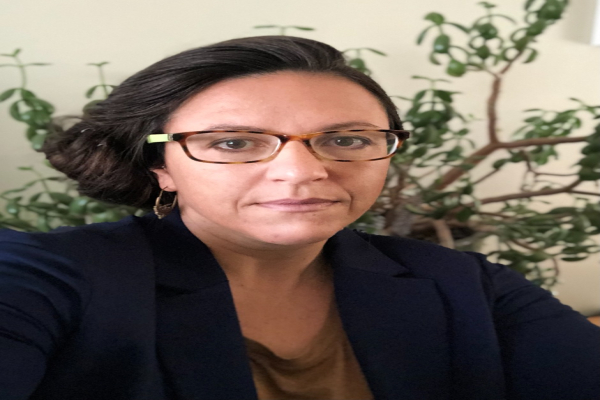
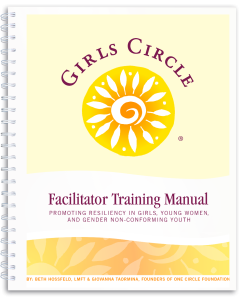
I went through Girls Circle Facilitator Training in 2017, and had the privilege of being trained by the wonderful Victoria Mahand. I remember going up to her after the training and asking her, “How do I do, what you do?” I was referring to her charismatic, inclusive, effective facilitation style. What she did next was model what a facilitator does. She didn’t give advice, she told me, “Danielle, go out and do.” So, that’s what I did for 5 years. I ran circles and grew our program within our community. However, I struggled those first few years with attendance, group cohesion, and managing group dynamics. I struggled because I didn’t use the tool that was given to me during my training, my facilitator manual.
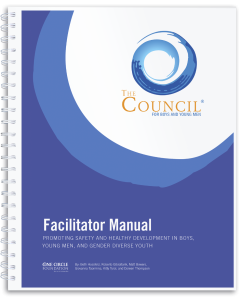
In 2017 I already had experience facilitating experiential groups for 60+ adolescent girls, I had my master's in Marriage and Family Therapy, and I felt confident that I knew what I was doing. My experience and education definitely helped me, but what I missed was remembering that I had a resource that was filled with research-based tips, tricks, and tools on how to solve these issues. For example, in Unit 2: The Girls Circle Model, p. 40-49, logistics are covered. In that section Choosing Your Location, Choosing the Number of Participants, Choosing the Time of Day, and Determining Group Configuration are covered. After reading through that I changed my group size from 10 to 7, moved my groups from after school to during school hours, advocated for a large quiet space, and chose to break up friend groups if there were more than two. After those adjustments, my groups went much smoother.
In our Girl Circle Facilitators Manual, we have dedicated an entire unit on Managing Group Dynamics, Unit 4. This unit will give you suggestions on how to handle 18 different group dynamics that may be challenging in groups, but it also highlights what our triggers are as facilitators. For me, I had to work on figuring out why I had such a reaction around the youth that was the “Over Talker,” “Breach of Confidentiality,” and “Power Struggle.” My favorite suggestion for the “Over Talker,” is giving that youth a job. I had my youth who liked to take the job of explaining the instructions to our activity, or keeping track of our time, something that gave them a pride/leadership role. “Breach of Confidentiality,” becomes a verbal discussion. I acknowledge to the group that confidentiality has been breached, I normalize that this can happen, I give the youth the chance to become accountable for their actions, then we move into restoring our circle by asking these questions, “How has this impacted you individually?” “How has this impacted the group?” and finally, “What do we need to do moving forward?” In my experience, the youth I found myself in a “Power Struggle” with most often had a filter on me. My tone of voice reminded them of another adult in their life. This is a good example of why it is so important for us as facilitators to do our own work. I typically ended up having a one-on-one conversation with this youth about my tone of voice and I acknowledged and validated the youth’s feelings about it. The youth and I would come up with a non-verbal action so they could notify me if the tone was coming back.
I love the saying, “Work Smarter, not Harder.” The Facilitator Manuals we offer really do allow you to do just that.
Read the entire section from the Girls Circle Facilitator Manual on Working With “Overtalking”
WORKING WITH “OVERTALKING”
Often there may be a participant in the group who will be viewed as overtalking. They
will speak longer than the rest of the members in the group and may or may not be aware
of it. With “overtalking,” needs can become problematic when:
- Others in the group do not have time to share
- The group becomes disinterested, bored, or fatigued or has lost interest in the topic or discussion or circle itself
- Participant(s) in the group do not feel like their individual needs are being met because of the “overtalking” and dominating of time during check-in, discussions, or activities
Suggestions for Working with “Overtalking”
- Ask the group how they think they’re doing with balancing listening and talking. Remind the group about the circle agreements. If needed, express your observation that some girls haven’t had a chance to speak.
- Use a timer; let participants rotate being timekeepers. (In groups where someone is chronically overtalking, timers are a handy and welcome relief to the group.)
- Ask for others to take a turn to talk. Be assertive and stop her in a gentle way. Say, “We appreciate what you’re saying but we have to move on.”
- Work in pairs or small groups often so all members can interact.
- Use a talking stick and/or specific time limits to control the amount of talking time she would have in the group. Assign one of the girls in the group to “keep time.” Involve the group as a whole.
- Review the group agreements at beginning of the session regarding the time limit for each member.
- Have the expectation up front that everyone gets equal time.
- Pass out two poker chips (or markers, tokens, pieces of colored paper, etc.) to each girl. They put a chip in the middle each time they talk. They cannot talk when they run out of chips, or must wait until each girl has used up her chips also.
- Acknowledge participants who use their time well, and encourage those who find it difficult managing their talk time.
- Put it out to the group: “How are we doing with following the agreements? Is everyone feeling heard?”
- Connect with the girl during break or before class and talk about leadership as helping others to speak up!
- Use a gesture or signal to let the person know it’s time to stop.
- Give them a responsibility, such as taking notes, or keeping time.
- Speak individually with the excessive talker; explore other possibilities for getting her needs met. Say, “I really see that you have a lot to say and I appreciate it. Yet, I need you to help me watch the time so everyone has a chance to express themselves.”


Related Products
Leave a Reply
Search The Blog
Categories
- One Circle Foundation
- Spanish
- Facilitator Tips & Tools
- LGBTQ+
- Funding
- Inspiring Stories
- Membership
- Creativity
- Classroom Support
- Trainings
- Facilitators
- Trainers
- Executive Director
- Implementation
- High Impact Practices
- OCF Board
- Autism Awareness Month
- Support Neurodivergent Youth
- Bay Area Training
- Bay Area Professional Development
- Newsletter
- ASCA Conference 2024
- Los Alamos JJAB
- Suicide Prevention
- movember
- Black History Month
- Awareness & Advocacy
- Social Studies
- Mental Health
- Intergenerational Trauma
- Must Read
- Civil Rights & Social Justice
- Freedom & Justice
- Inspiration & Leadership
- Martin Luther King Jr.
- Sexual Assault Awareness Month
- Social Justice
- Mental Health & Wellness
- Community Education
- Voice and Choice
- Mental Health in Education
- Adolescent Behavior
- Teen Psychology
- One Circle
- Emotional Intelligence
- Wellness & Self-Care
- Social Media & Teens
- Personal Growth
- Storytelling / Personal Narrative
- Training
- Curricula
- Girls Circle
- Unity Circle
- Guest Blogger
- The Council for Boys and Young Men
- Womens Circle
Archives
- April 2026
- March 2026
- February 2026
- January 2026
- December 2025
- November 2025
- October 2025
- September 2025
- August 2025
- July 2025
- June 2025
- May 2025
- April 2025
- March 2025
- February 2025
- January 2025
- December 2024
- November 2024
- October 2024
- September 2024
- August 2024
- July 2024
- June 2024
- April 2024
- March 2024
- February 2024
- January 2024
- December 2023
- November 2023
- October 2023
- September 2023
- August 2023
- July 2023
- June 2023
- May 2023
- April 2023
- March 2023
- February 2023
- January 2023
- December 2022
- November 2022
- October 2022
- September 2022
- August 2022
- July 2022
- June 2022
- May 2022
- April 2022
- March 2022
- February 2022